Aumla Winning with Wellbeing
Women’s health at work – lessons from Aller Media
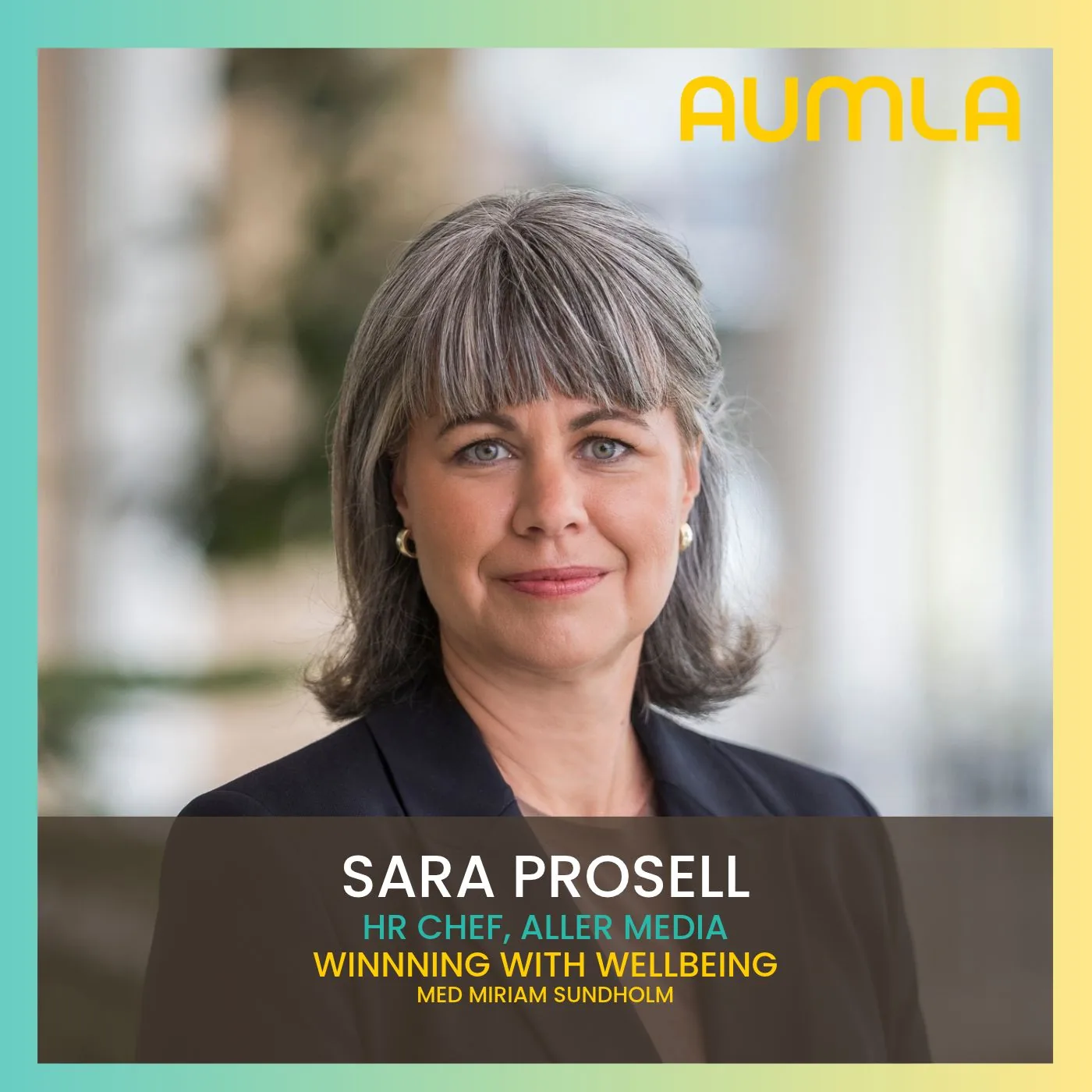
How can an organisation work in a more structured way with women’s health? And what happens when it becomes part of work environment management – not just an individual health issue? Miriam Sundholm talks with Sara Prosell, Chief People & Culture at Aller Media Nordic.
Sara ProsellChief People & Culture at Aller Media Nordic
The conversation is in Swedish.
Why Aller Media started
Aller Media Sweden has worked with women’s health from several angles: policy and culture, training for managers and employees, and access to individual support and care. The work didn’t start because of a clear problem in the sick-leave statistics – but because of other signals, and a clear link to Aller Media’s own business.
From individual health to the work environment
A first concrete step was to include women’s health in Aller Media’s general work environment policy. That is an important shift: it shows the issue is legitimate and part of how the organisation works – in culture, knowledge, how managers act and what support exists.
Knowledge for managers and employees
Training has been central. One of Sara’s key lessons is that a manager can be good support without knowing everything. The training includes concrete cases: what do I say if an employee tells me she’s not feeling well? How do I ask without being too personal? How do I show support without trying to solve the problem myself?
Psychological safety and individual support
No single training or policy creates safety – and not everyone will want to talk about their health at work. Aller Media also partnered with Ester Care for individual support, because not every problem can be solved with information. The need turned out to be larger than the organisation first saw.
What should employers do?
For Sara, the next step is above all to de-dramatise the topic: create a more open culture, increase knowledge among managers and employees, and make it part of work environment management. The new ISO 45010 standard puts further focus on this.
Key takeaways
- Start even if the need isn’t clearly visible – women’s health is often something employees don’t talk about.
- Make it part of work environment management – policy shows the issue is legitimate.
- Train managers: good support doesn’t require having all the answers.
- Combine knowledge with access to concrete, individual support.