Aumla Winning with Wellbeing
Inclusive leadership – from diversity to belonging
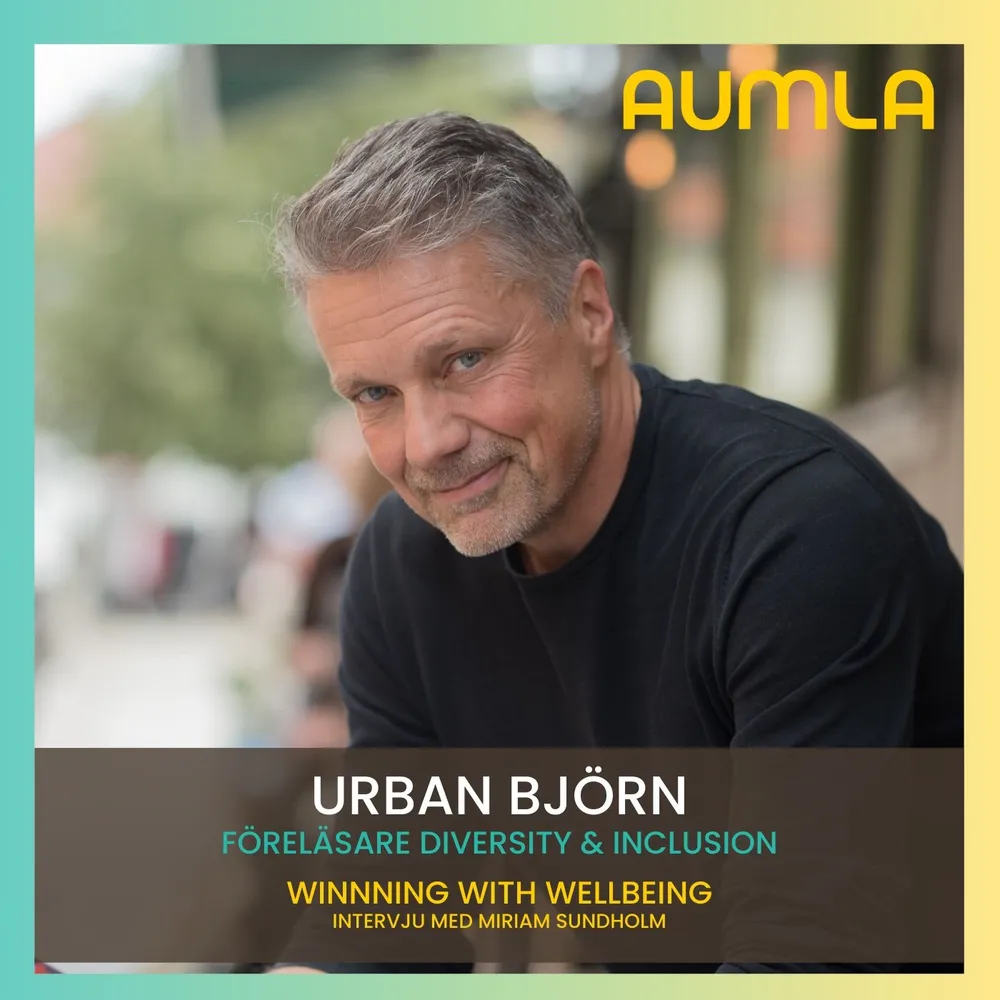
Urban Björn has trained close to 5,000 managers in inclusive leadership. He explains why belonging is key to wellbeing and innovation – and how managers can start in practice.
Urban BjörnSpeaker on inclusion, founder of Business as Equals
The conversation is in Swedish.
From investment banking to inclusive leadership
Urban Björn spent most of his career as a manager in investment banking in Stockholm and Oslo – a homogeneous environment where he was, in his own words, “perfectly within the norm”. Seven or eight years ago he turned to working with people and HR. Today he runs Business as Equals and has trained close to 5,000 managers in inclusive leadership.
Diversity, inclusion – and belonging
Diversity is about our differences; inclusion about everyone being able to take part; equity about fair conditions, such as inclusive job ads or hearing loops in meeting rooms. The next step is belonging: a culture where people can be themselves and perform on their own terms. Diverse teams are harder to lead and may perform worse in the short term – but over time they deliver what most organisations want: innovation, creativity and growth.
Move responsibility from HR to leadership
Urban’s training for managers has three steps: basic knowledge so managers feel confident discussing the topic, insight into unconscious bias, and active choices about what to do differently tomorrow. It should be enjoyable, not a lecture.
The grey-zone exercise
Teams look at real examples of things said or done at work and each person shows a red, yellow or green card: is this OK here, uncertain, or not OK? There is no answer key, but the team becomes aware of how differently people interpret situations – and can agree on what applies. The conversation itself builds closeness and psychological safety.
Measure, reward and start with your why
Urban recommends employee surveys with questions on inclusion and psychological safety, an index for how inclusive managers are, and a look at how reward systems steer behaviour. To start: define your why, train managers in inclusive leadership, and act – including when planning wellbeing activities and team events. Small adjustments, such as sending an agenda for an after-work event, make it easier for introverts or neurodivergent colleagues to take part. The most important trait of an inclusive manager is curiosity.
Key takeaways
- Belonging – being able to be yourself and perform – is the goal beyond diversity and inclusion.
- Diverse teams are harder to lead but deliver more innovation and creativity over time.
- Place responsibility for culture with leadership, supported by HR.
- Combine knowledge, insight into unconscious bias and concrete personal commitments.
- Measure inclusion and psychological safety in employee surveys, and analyse differences between groups.