Aumla Winning with Wellbeing
Emotional wellbeing at work
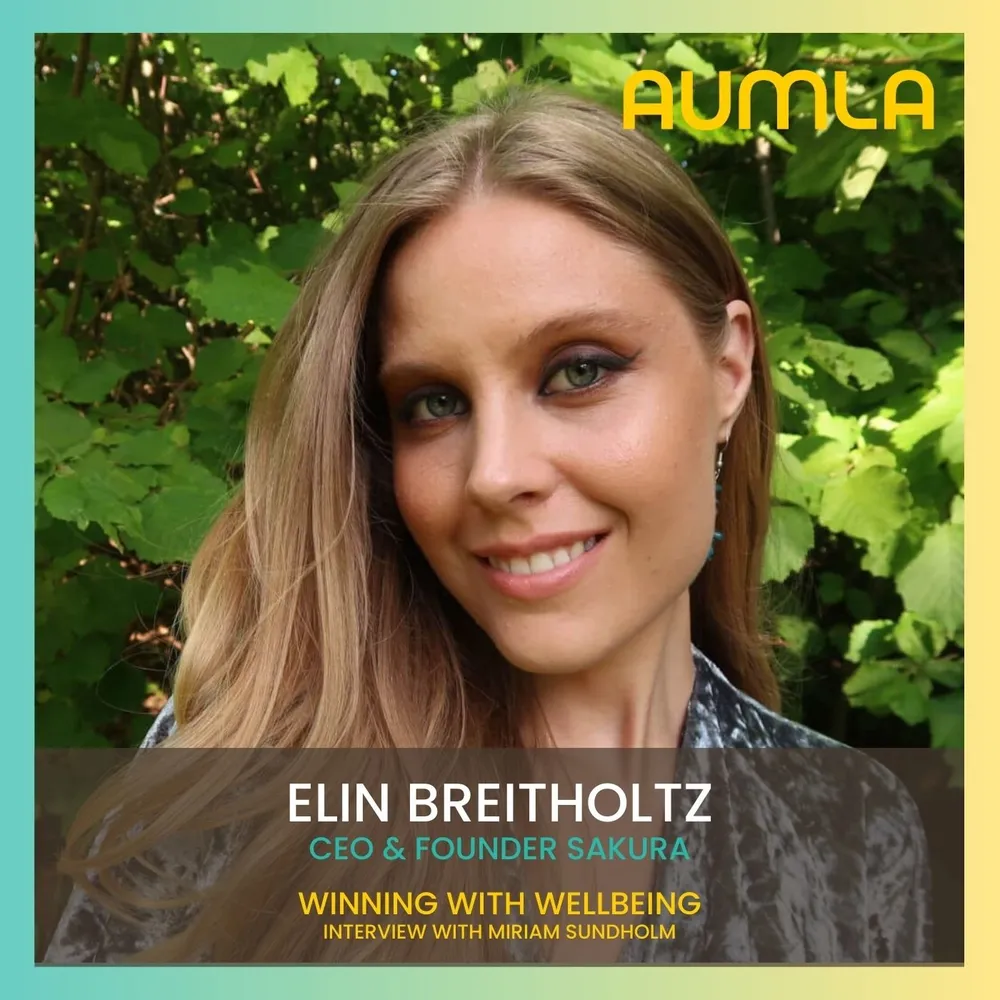
We don’t stop being human when we go to work. Elin Breitholtz, founder of Sakura, on understanding our emotions – and what workplaces can do to make it safe to be fully human.
Elin BreitholtzFounder of Sakura
Emotions show the way
Elin Breitholtz founded Sakura, which provides tools for emotional wellbeing, out of her own experience of difficult periods. To her, mental and emotional health are essentially the same – but the word emotional shifts the focus to what we feel in the body, which is often where it hurts.
Her definition is simple: just as a tree needs water and light, humans have needs. When we live in line with them, we feel harmony. When we don’t, our emotions signal that something is off.
Emotions are trying to help us. A negative feeling shows that something in our focus or priorities doesn’t match what we need.
Needs and wants are connected
Elin argues that what we want and what we need belong together. Behind a want – a promotion, a move, fame – there is often a deeper need, such as being seen or appreciated. Asking why you want something helps you find the need beneath it, and meet it in more ways than one.
Let the emotion pass
You can’t turn up the volume on positive emotions and turn down the negative ones. People who allow themselves to feel often experience both more joy and more sadness – but the emotions also pass more quickly. Miriam describes it as a thunderstorm moving through.
For someone who has never done this, it can be frightening. That is why safety and support matter – along with knowing that it is just an emotion. This too shall pass.
We don’t stop being human at work
Even in the most professional setting, like a sales call, we are human – with fears, needs and reactions. Making room for emotions at work is the opposite of suppressing them, and it is closely linked to vulnerability and psychological safety: being able to say I don’t know or I’m having a hard time right now.
Mental ill-health is now the most common reason for sick leave in Sweden. Elin and Miriam agree that emotions don’t explain everything – but they play a far bigger role in health and performance than most workplaces account for.
Two minutes that make a difference
Elin uses an everyday image: a child who won’t go to nursery when you are rushing to meetings. Sitting down to listen for two minutes feels counterproductive – but often means the child feels seen and wants to come along. The same goes for colleagues. Taking a few minutes to ask how someone is doing, and really listening, can be the most effective thing you do.
What can the workplace do?
- Make it safe to be human – an environment where needs, fears and reactions are allowed
- Bring in professional support – managers don’t need to be therapists, and shouldn’t be
- Meet social needs – being seen, appreciated and belonging. Small things, like being met with a smile, matter
- Talk about the vision with feeling – shared meaning and pride in what the organisation contributes create energy
- Practise listening – deep listening is a skill that can be developed
Key takeaways
- Emotions are signals about our needs – not something to suppress.
- Behind what we want there is often a deeper need, such as being seen.
- Emotions that are allowed pass more quickly.
- Psychological safety makes it possible to be a whole person at work.
- Workplaces can meet many of our social needs – community, appreciation and meaning.