Aumla Winning with Wellbeing
Physical activity at work – from wellness perk to strategic tool
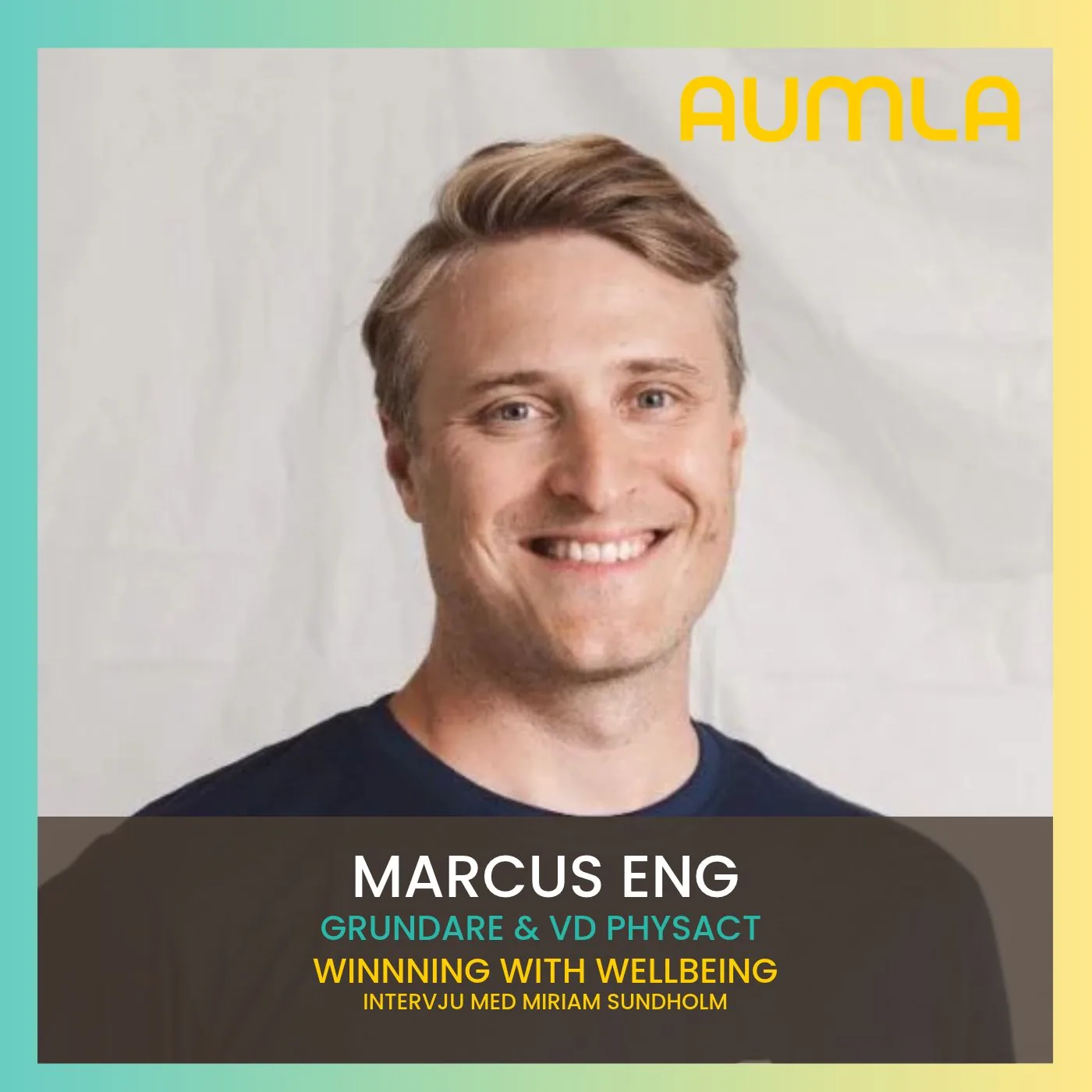
Can physical activity reduce stress, improve wellbeing and support a more sustainable working life? Miriam Sundholm talks with Marcus Eng, physiotherapist and founder of PhysAct, about physical activity as part of preventive health work – and why continuity can matter more than performance.
Marcus EngPhysiotherapist, founder and CEO of PhysAct
The conversation is in Swedish.
Not everyone starts in the same place
Some employees train regularly and use their wellness allowance. Others don’t – and they are often the ones traditional wellness initiatives fail to reach. Marcus says that 54 percent of PhysAct’s users are completely physically inactive when they start. Which raises a key question for employers: who do our wellness initiatives reach – and who do they miss?
Continuity over perfection
Physical activity doesn’t have to start with training. A walk, taking the stairs or five minutes of movement can be more realistic than a full workout. Establishing a habit can matter more than doing the perfect session – and individually adapted support helps more people get started.
Physical activity isn’t the answer to all stress
Physical activity can strengthen wellbeing and resilience. But if many employees experience high stress, the question isn’t only “how do we get more people to exercise?” but also “what in our work environment creates stress?” And recovery matters as much as activity.
From wellness to prevention – and a business case
To make physical activity part of strategic health work, the organisation needs to follow what happens: participation, perceived stress, wellbeing, work ability, engagement and short-term absence. Marcus’s advice to HR: start with the value for the organisation – which health challenges do we have, and what would improving them mean for the business?
Key takeaways
- Start where you are – even small amounts of movement have value.
- Continuity matters more than perfection.
- The same wellness initiative doesn’t create the same value for everyone.
- Physical activity can’t solve organisational causes of stress.
- Measurement turns activity into insight and follow-up.