Aumla Winning with Wellbeing
Sustainable leadership – self-leadership, clarity and handling imbalance
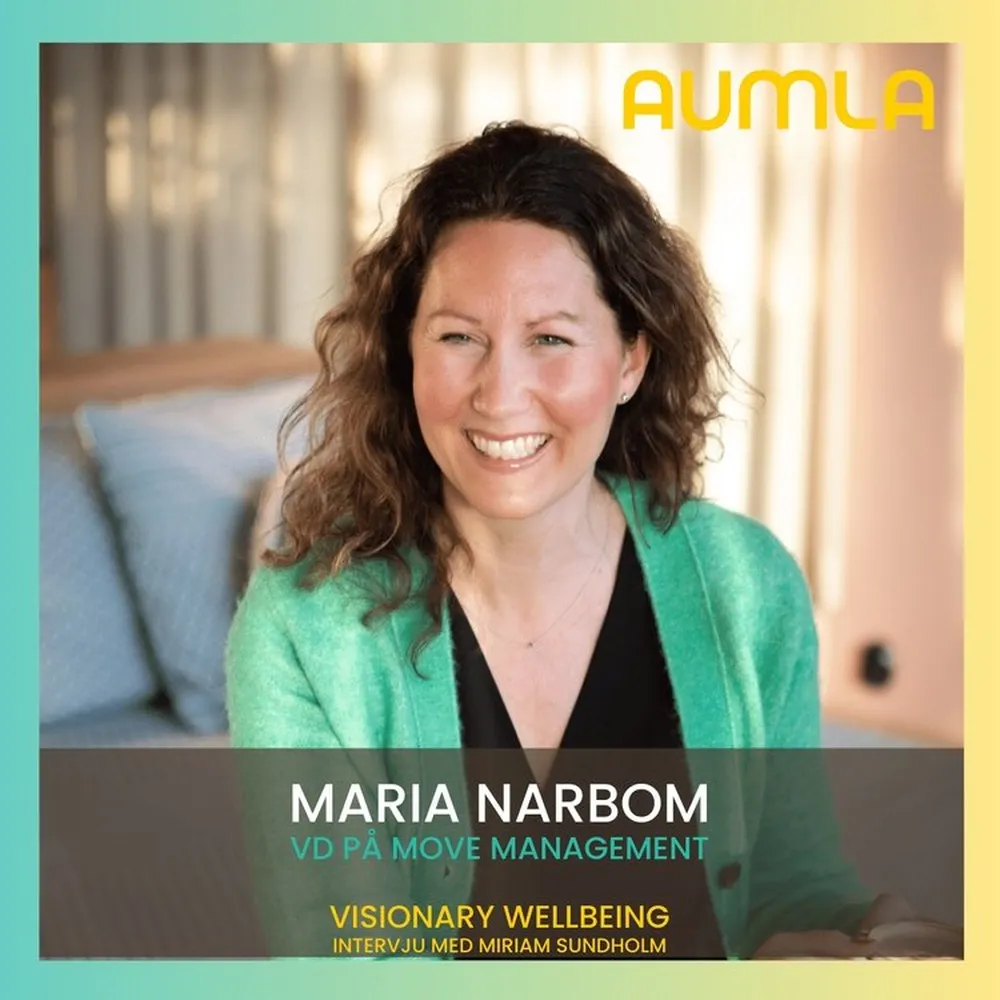
Maria Narbom, CEO of MOVE Management, on what sustainable leadership means in practice – from self-leadership and resilience to clear expectations and trust in the team.
Maria NarbomCEO of MOVE Management
The conversation is in Swedish.
A conversation about sustainable leadership
Leadership is full of buzzwords. In this episode, Miriam Sundholm unpacks what sustainable leadership really means with Maria Narbom – leader, coach and adviser, and today CEO of the consultancy MOVE Management, which works with leadership and team development.
Self-leadership comes first
For Maria, self-leadership means being able to lead yourself in every kind of situation, relationship and context – and it applies to everyone, not only those with a formal management role. It means knowing your needs, what gives and drains your energy, and how you affect and are affected by others. At work it also requires a clear remit with clear expectations.
Sustainability is individual – and needs structure
Like stress, sustainability is individual and depends on context. That is why it is about building structures and ways of working that make everyday life as sustainable as possible – including a reasonable situation for managers, such as a manageable number of direct reports.
What managers struggle with today
Many managers Maria meets have to deliver tough news in an uncertain market, and many feel they have no time to lead as reduced resources make them more operational. What matters most, she says, is communication, bringing people along – and clarity. Unclear roles and expectations create stress: people over-deliver and never feel secure in what they deliver.
Safety, trust and presence
To prevent mental ill-health in the team, Maria highlights clear frames around the remit, continuous dialogue about how people are doing, transparency, involvement and trust. A manager also needs to feel secure in their own role to create safety for others.
Resilience and accepting imbalance
Resilience – the ability to recover after setbacks – can be trained. Maria uses focus training and mindfulness, reflective writing, a meeting-free day each week, and protects sleep, exercise and energising relationships. Her key message: stop striving for a balance that doesn’t exist. Prioritise, keep expectations reasonable, plan recovery – and don’t forget to have fun along the way.
Key takeaways
- Sustainable leadership starts with self-leadership – and self-leadership applies to everyone.
- Clear remits and expectations are one of the most effective ways to reduce stress.
- Trust is built through transparency, involvement and continuous dialogue.
- Resilience can be trained, for example through focus training and reflection.
- Accept imbalance, prioritise and plan for recovery.