Aumla Winning with Wellbeing
Careers and women’s health – how our hormones affect us
Perimenopause often starts around 40 – long before periods stop. Medical journalist Katarina Wilk on how hormones affect the brain, sleep and stress tolerance, and what workplaces can do to retain women’s expertise.
Katarina WilkMedical journalist, author and speaker
The conversation is in Swedish.
From personal experience to ten years of research
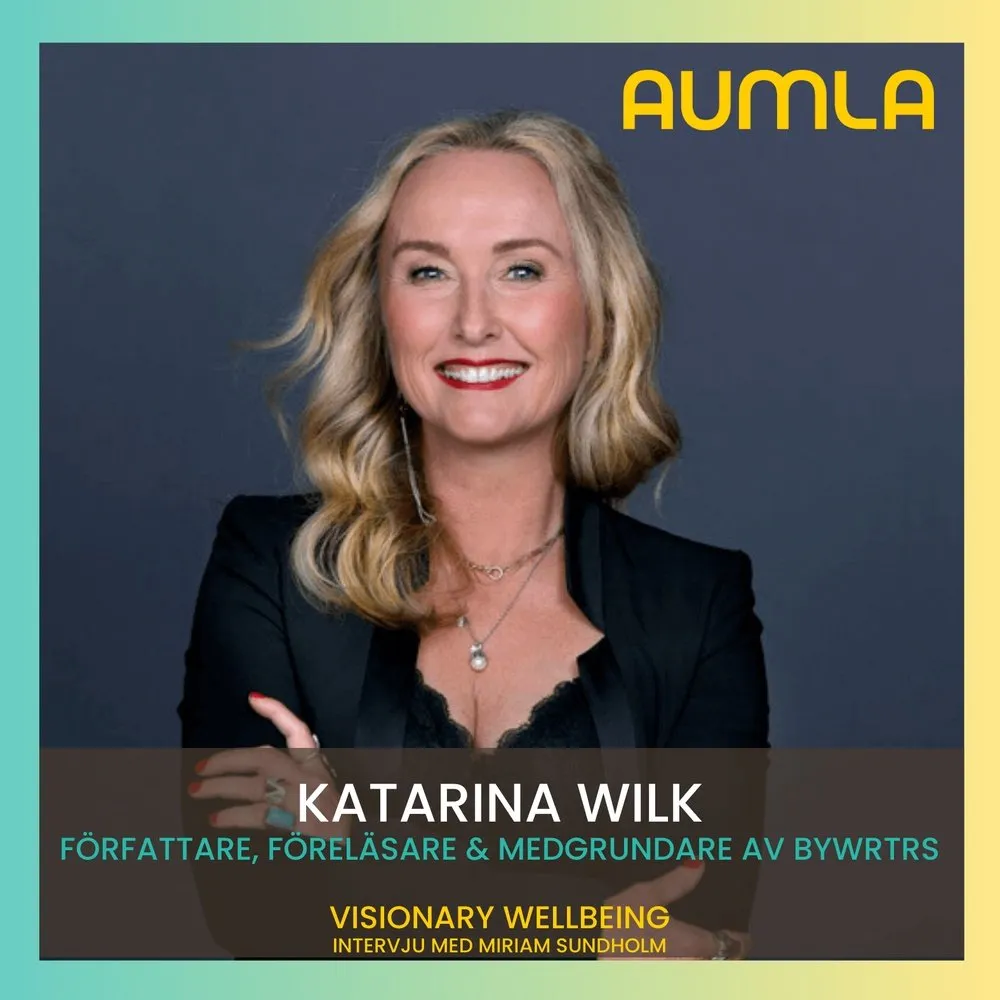
Katarina Wilk is a medical journalist, speaker and author of a Swedish book on perimenopause and burnout that has been translated into seven languages. Her motivation is personal: at 42 she stopped sleeping, had panic attacks and was offered sick leave for exhaustion depression and antidepressants. She felt something else was going on – and started digging into the research.
I had found a knowledge gap. Not just in Sweden – it exists all over the world.
Perimenopause is the most turbulent phase
Many people believe menopause starts when periods stop around 50. But the years before – perimenopause – are the most turbulent. Until around 40, oestrogen and progesterone follow each other through the menstrual cycle. In perimenopause they start to fluctuate.
Katarina describes oestrogen as our energy hormone and progesterone as our calming hormone. When the balance shifts, the sleep hormone melatonin, the stress hormone cortisol and serotonin are affected too. The result can be sleep problems, anxiety and lower stress tolerance.
Not everyone is affected. Katarina refers to roughly one in three women having severe symptoms, while one in four notice nothing at all. An early sign can be that PMS days no longer pass.
The brain in focus
Research on women’s brains is still young – much health research has been done on men, precisely because hormonal fluctuations complicate studies. But more is emerging, including imaging that shows how the brain changes around menopause. Katarina also points out that symptoms of perimenopause, burnout and ADHD often overlap, making them hard to tell apart.
Living with your cycle
Miriam describes how she tracks her cycle in an app and plans her weeks around it – more intense training and more meetings when energy is high, more calm when it is lower. It also helps her not take negative days so seriously.
Katarina’s advice: take in knowledge from many sources and then choose what suits your body – lifestyle changes, treatment or both. Some studies suggest strength training can reduce hot flushes and improve sleep, and that nature lowers stress. Mindfulness can help you relate to thoughts and feelings.
Don’t believe anyone – not me either. Take in all the information you can and then listen to what your body needs.
What can the workplace do?
Half the population goes through this, yet the subject is still taboo. Katarina often sees women start talking openly only after a talk – and feel relieved to be able to.
- Raise knowledge at every level – from health representatives to senior management. One municipality Katarina spoke to produced its own guide on hormonal health for all employees
- Change the narrative – talk about hormones and brain health 40+, not only about “menopause”
- Offer flexibility – being able to work from home when needed can boost energy, motivation and productivity
- Dare to ask – managers who show interest, and women leaders who share their own experience, can change the culture
- Invite everyone – men who understand what their colleagues, partners and daughters are going through make a difference
Understanding hormonal differences is not a backlash for equality, Katarina argues – quite the opposite. If women leave work or step back from their careers at this age, organisations lose valuable expertise. The key, she says, is more self-leadership in ourselves and more empathetic leadership from managers.
Key takeaways
- Perimenopause often starts around 40 and is the most turbulent phase.
- Hormonal fluctuations affect sleep, stress and mood – and symptoms are often mistaken for burnout.
- Knowledge and openness at work break the stigma.
- Flexibility and empathetic leadership help organisations retain women’s expertise.