Aumla Winning with Wellbeing
Sustainable people through collaboration skills
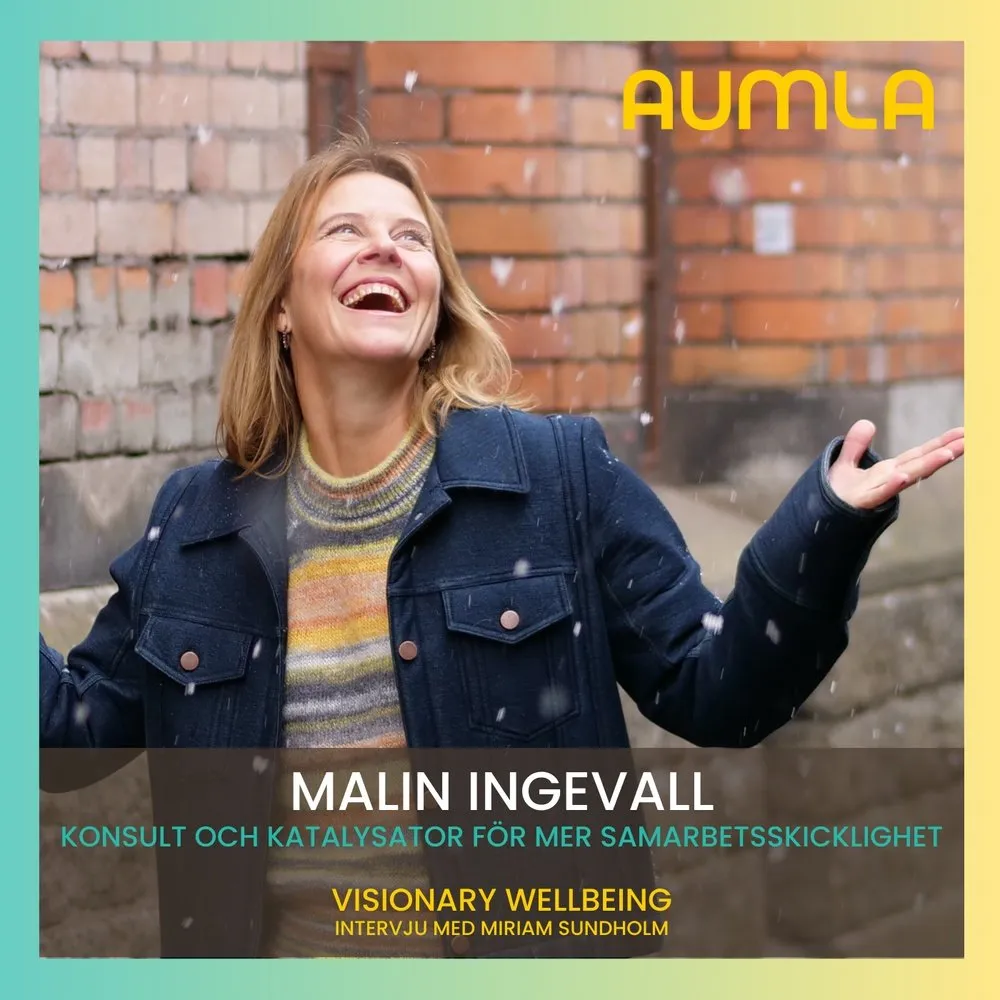
Collaboration starts with your relationship with yourself. Malin Ingevall on personal sustainability, the courage to address friction before it becomes conflict, and how leaders create safety for honest feedback.
Malin IngevallConsultant and catalyst for collaboration skills
The conversation is in Swedish.
Sustainable employees, profitable companies
Malin Ingevall has led projects, productions and teams and now trains and coaches in collaboration skills. Her motto: sustainable employees make profitable companies. Personal sustainability rests on three pillars: mental and physical health, our mindsets and our lifestyle.
Three perspectives on collaboration
Collaborating with yourself (understanding your drivers, values and patterns), with others (starting from a genuine intention), and with the world around you (uncertainty, crises, systems and AI). A simple test: do you keep the promises you make to yourself?
Life hacks
Malin’s “Daily Six” splits your to-do list into three work priorities and three things you will do for yourself. Replace “must” with “want” or “need”, lower the bar so you actually start, make success easy, and celebrate small wins.
Address friction before it becomes conflict
Much of what we carry home from work is about relationships that chafe. Malin’s guiding words for difficult conversations are courage, love and integrity. Use feedforward, go in curious rather than armed with criticism, remember that the other person’s reaction is not your responsibility – and that it’s fine to come back to a conversation once the stress has settled.
Safety, play and SCARF
Effective collaboration needs psychological safety, trust and self-leadership. Leaders can build it through dialogue, role play, dilemmas and playful exercises – with “yes, and” rules in creative workshops. Malin also shares David Rock’s SCARF model: status, certainty, autonomy, relatedness and fairness. When these are met, motivation and wellbeing rise; when they are missing, stress follows.
Key takeaways
- Collaboration starts with self-awareness and a clear intention.
- Small, realistic steps and celebrated wins build new habits.
- Address friction early, with courage, care and curiosity.
- Feedback is easier when grounded in a shared wish to improve.
- Relationships and collaboration are a health factor – SCARF shows why.