
Keynotes & workshops · Capgemini Sweden
Capgemini – when leadership talks openly about women's health and menopause
A keynote and leadership panel during Menopause Awareness Month, for all employees in Sweden
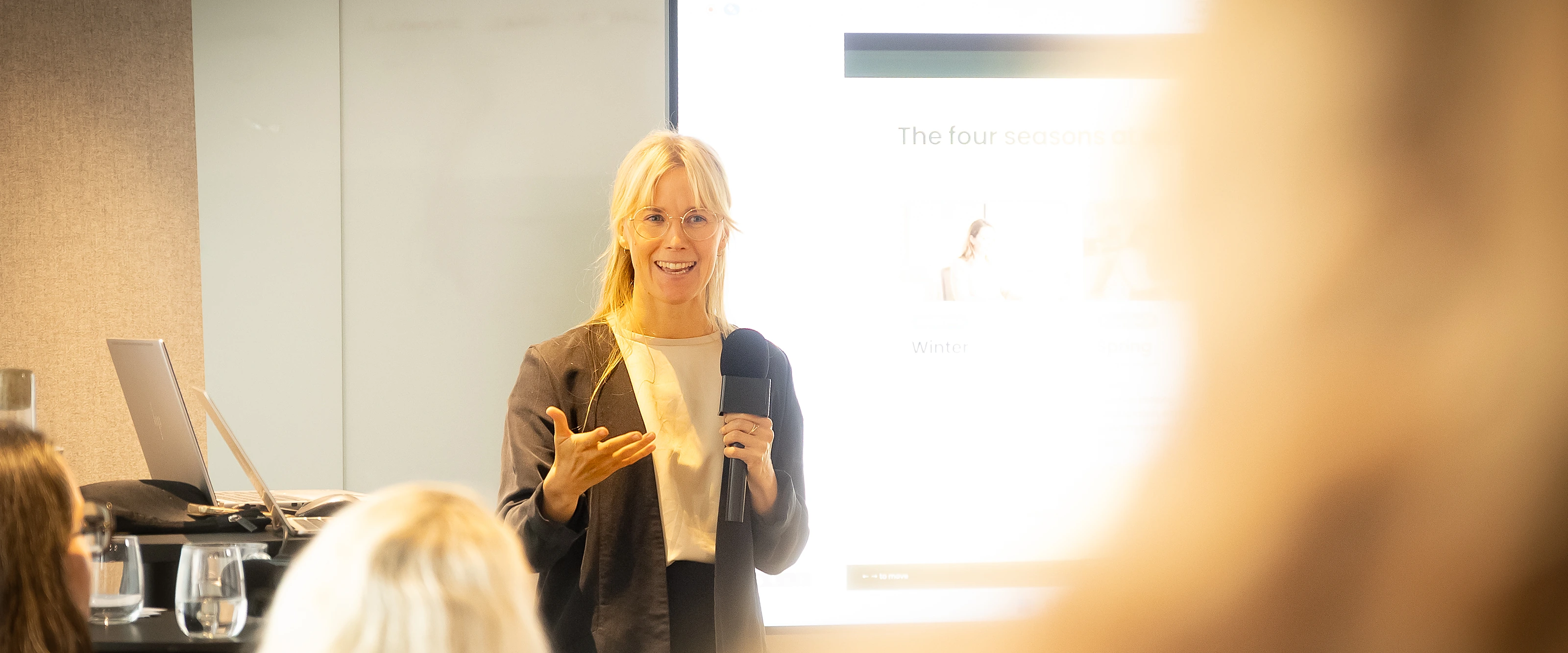
During Menopause Awareness Month in October, Capgemini Sweden invited all employees to a lunchtime keynote on women's health at work, focusing on menopause, hormonal health and energy. Aumla gave the talk, followed by a panel with Capgemini's leadership. The result was an open conversation, clear insights from employees and a foundation for the next steps in supporting women's health at work.
The challenge
Women's health affects a large part of the workforce, yet it remains one of the least discussed topics at work. Hormonal changes, such as during menopause, can affect energy, sleep, concentration and wellbeing – often at the height of a career.
Capgemini Sweden wanted to take a clear step: make women's health a natural part of the conversation about health and performance, and show that it is an issue for the whole organisation – not a private matter.
The initiative was driven by Tanya Blomqvist, [TITLE], and linked to Menopause Awareness Month in October, ahead of World Menopause Day on 18 October.
Aumla's contribution
On 13 October 2026, Miriam Sundholm (Aumla) and Cinna Brahme gave the keynote Women's health at work for employees at Capgemini's offices in [five locations] across Sweden.
The talk took participants from why to how:
- Why women's health is a workplace issue – and why the new standard ISO 45010 makes it part of occupational health and safety management
- The biology – hormones, the menstrual cycle and the different stages of life, including menopause
- What each of us can do – movement, nutrition, sleep and recovery
- What the workplace can do – how managers and colleagues can create trust and support
During the talk, participants answered questions anonymously via Mentimeter, giving Capgemini direct insight into knowledge, needs and wishes.
The keynote was followed by a panel with Capgemini's leadership: CEO Caroline Segerstéen Runervik, Ann Hellenius and Finn Alkskog, moderated by Louise Oliver Elgh. The panel discussed awareness, psychological safety and the role of managers.
What employees said
- 93% rated the session good or excellent (4.4 out of 5)
- Almost 9 in 10 already had some knowledge of how hormones affect energy and performance
- Almost 6 in 10 feel comfortable talking to their manager about health
- Top wishes: wellbeing hours, normalising the conversation, flexibility to work from home and quiet spaces for recovery
How Capgemini experienced the collaboration
[QUOTE – SUGGESTION TO APPROVE OR EDIT] Women's health affects so many of our colleagues, yet it is rarely talked about at work. Inviting all our employees in Sweden, and having our leadership join the conversation, sent a clear signal that this matters here. The engagement and feedback show it was the right step.
[QUOTE FROM AARON – A SHORT QUOTE IS WELCOME]
The result
A keynote that brought together employees across Sweden, an open conversation with leadership and concrete insights into what employees need.
The insights show that the knowledge is already there for many. What is missing is the ability to talk about it. Aumla therefore compiled the results into an insights report with recommendations to support Capgemini's continued work.
Aumla's perspective
When leadership joins the conversation about women's health, the signal changes – from "this is yours to handle alone" to "this is part of how we build a sustainable workplace".
Aumla recommends three steps for organisations that want to go further:
- Connect women's health to your people strategy – wellbeing, attracting and retaining talent, and giving everyone the opportunity to develop
- Equip managers – for safe, respectful conversations and clear adjustments
- Design work for every life stage – with flexibility and room for recovery
ISO 45010, the world's first international standard on menstruation, menstrual health and menopause in the workplace, provides a framework for exactly this work.
Key takeaway
Women's health at work starts with a conversation – and becomes real when leadership takes part. A clear initiative, open leadership and employees' own voices create a strong foundation for the next step.