
The leadership group
Reviews the survey, chooses a few themes and sets the frame: pace, goals and how mistakes are handled. Gives managers mandate, time and a clear remit.
Psychological safety · Survey, workshop and manager support
In a safe team people can ask questions, admit mistakes and disagree. That is where problems surface early and people keep going over time. We help leadership groups, managers and employees build that safety, with a survey that shows where you stand.
Why it matters
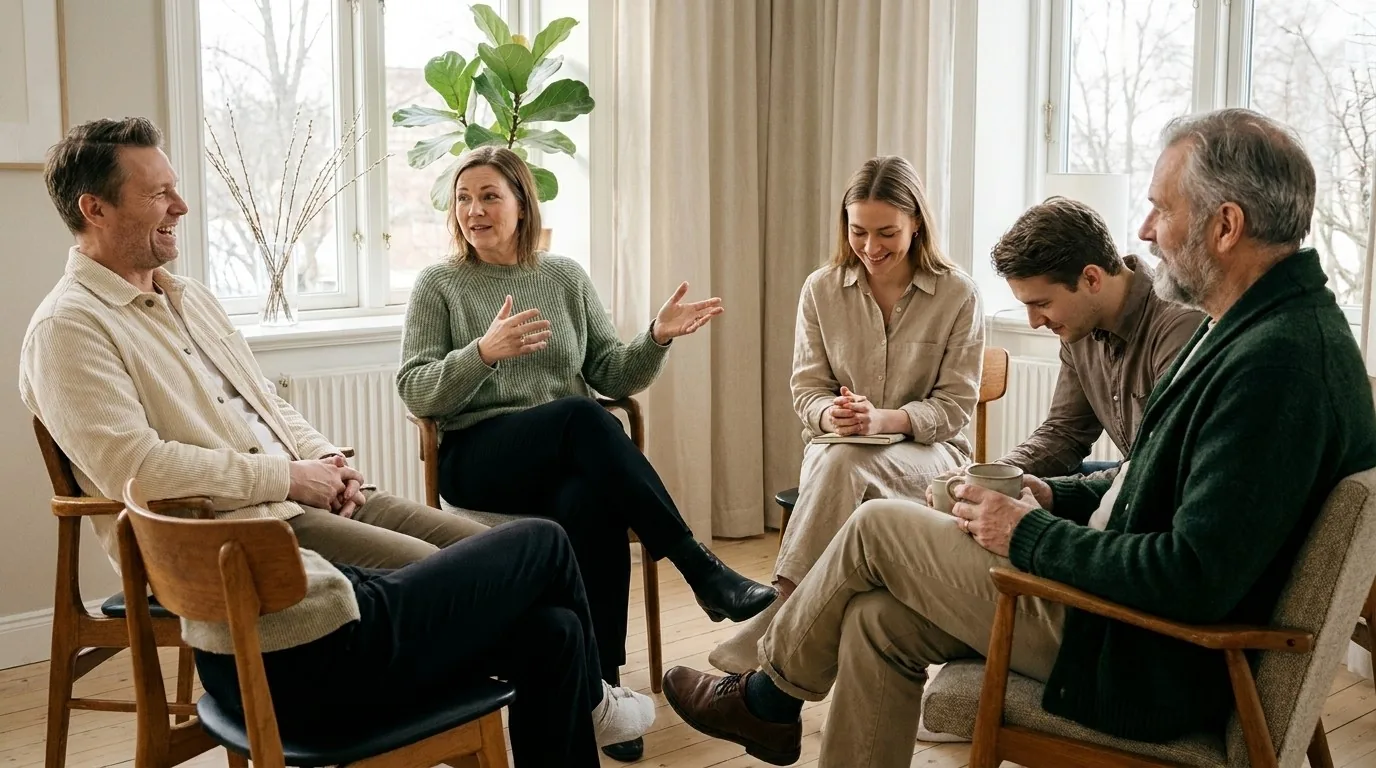
Psychological safety means that people in a team can take interpersonal risks without worrying about being punished or belittled. It is a property of the team and its everyday life, not of individual employees. Research by Edmondson and Google's team study shows that safety is associated with learning and performance.
Aumla’s model
Psychological safety belongs in social wellbeing at the team level in Aumla’s model of physical, mental and social wellbeing at the individual, team and organisational level. It cannot be built at one level alone, so we work on all three at once.
Reviews the survey, chooses a few themes and sets the frame: pace, goals and how mistakes are handled. Gives managers mandate, time and a clear remit.
Get knowledge and tools to build safety in everyday work and to lead the difficult conversations in their teams.
Take part in the survey, try short team exercises and hear what happens after the survey.
How we work
A simple, anonymous survey tailored to your organisation. We handle all answers and you only see combined results. Groups under five people are never shown.
The leadership group goes through the results with us and chooses a few themes to work on, instead of drowning in data.
A joint workshop for managers on what builds safety and how to lead the conversations in their teams. Practical tools and exercises to use right away.
Short team exercises and everyday conversations, so the change is visible and everyone knows what happens after the survey.
The same survey is run again after a few months and compared with the first, so you can see what has changed.
Monthly team exercises and a follow-up call with your managers, so the work keeps moving between surveys.
The survey
Safety can only be measured honestly if people dare to answer honestly. That is why the survey is independent: Aumla handles invitations and all answers, and you only see combined results. The questions are tailored to you, starting from the research on psychological safety.
What we follow up
Change in how safe it is to raise mistakes, ask for help and disagree, before and after.
How confident the manager feels leading difficult conversations, and how the team experiences it.
Selected indicators, such as short-term absence and staff turnover, followed over time together with you.
Grounding: Psychological safety is not a legal requirement, but it is connected to the organisational and social work environment (AFS 2023:2, the Swedish regulations) and to systematic work environment management: early signals about workload and victimisation only surface where it is safe to voice them. The work builds on research by Amy Edmondson and on Google’s team study, Project Aristotle.
Want to work more broadly on the team’s conditions? See Sustainable teams.
Who it is for
Outcomes
Hover over a step to read moreTap a step to read more
We go through goals and expectations with leadership and tailor an anonymous survey to your organisation.
The survey runs. The leadership group reviews the results with us, and the managers take part in a workshop.
Team exercises in everyday work, and a new survey after a few months to see what has changed.
Related cases

Strategy & measurement
NCAB Group wanted a clearer, more coherent direction for wellbeing across the organisation. Aumla supported NCAB in developing a global wellbeing framework with clear goals, KPIs and a shared structure for mental, physical and social health – moving from a broad ambition to a concrete, strategic way of working integrated into existing People and HR work.
Read the case →Implementation & activation
A 100-day programme combined measurement, workshops, individual analysis, coaching and digital activities to strengthen health and recovery in an organisation of more than 1,000 employees.
Read the case →
Keynotes & workshops
Aumla delivered an interactive talk and workshop on stress, self-leadership, social health and the work environment. Through Menti, reflection and dialogue, the group made visible both strengths and areas for development in their working day.
Read the case →FAQ
That people in a team can take interpersonal risks, such as asking a question, admitting a mistake or disagreeing, without worrying about being punished or belittled. The concept comes from researcher Amy Edmondson and is about the team’s everyday life, not the personality of individual employees.
No, the concept is not a requirement in the work environment regulations. But it is connected to the Swedish regulations on the organisational and social work environment (AFS 2023:2): early signals about workload and victimisation only surface where it is safe to voice them.
With a simple, anonymous survey tailored to your organisation, with questions about raising mistakes, asking for help, voicing different views and manager behaviours, among other things. Aumla handles all answers and you only see combined results. Groups under five people are never shown.
The leadership group, the managers and the employees, in different ways. The leadership group reviews the results and sets the frame, the managers take part in a workshop, and the employees take part in the survey and in short team exercises.
A set-up with survey, leadership review, manager workshop and follow-up usually runs over three to six months, adapted to your organisation. The optional monthly team exercises run longer.
Sustainable teams looks more broadly at the team’s conditions: demands and resources, meaning, prioritisation and safety. Psychological safety in teams goes deeper into safety and is aimed at the leadership group, managers and employees together.
For HR, People & Culture and leadership teams. Tell us where you are today. Together we’ll review your situation, your data and the steps that will have the greatest impact – for both people and results.