Leadership & sustainable teams
Psychological safety in teams: what it is and how managers build it
In a safe team people can speak up, ask questions, admit mistakes and disagree. Here is what the research shows and how managers, HR and teams can build it in everyday work.
What is psychological safety?
Psychological safety means that people in a team can take interpersonal risks without worrying about being punished or belittled. It is about being able to ask a question, say you do not understand, admit a mistake or challenge an idea, and still belong.
The concept comes from researcher Amy Edmondson, who in 1999 described it as a shared belief in a team that it is safe to take such risks. It is a property of the team and its everyday life, not a personality trait of individual employees.
It is just as important to know what it does not mean. Psychological safety does not mean that everyone always agrees, that demands are low or that nobody gets criticised. On the contrary, honest and constructive feedback is often possible precisely in safe teams.
What does the research say?
Edmondson's study of 51 work teams in a manufacturing company found that psychological safety was associated with learning behaviour in the team, and that learning behaviour was in turn associated with team performance.
Google's large team study, Project Aristotle, singled out psychological safety as the most important of five factors in effective teams. The other four were dependability, structure and clarity, meaning, and impact.
A meta-analysis of many studies (Frazier et al., 2017) found that psychological safety is associated with both task performance and with people helping each other beyond their formal duties. Most of the studies measure at a single point in time, though, so the findings cannot show for certain what causes what.
Research is also under way in Sweden. Karolinska Institutet, with funding from AFA Försäkring, is studying whether psychological safety in front-line teams in construction, transport and industry is linked to safety behaviours, risks, stress and health.
Signs of high and low safety
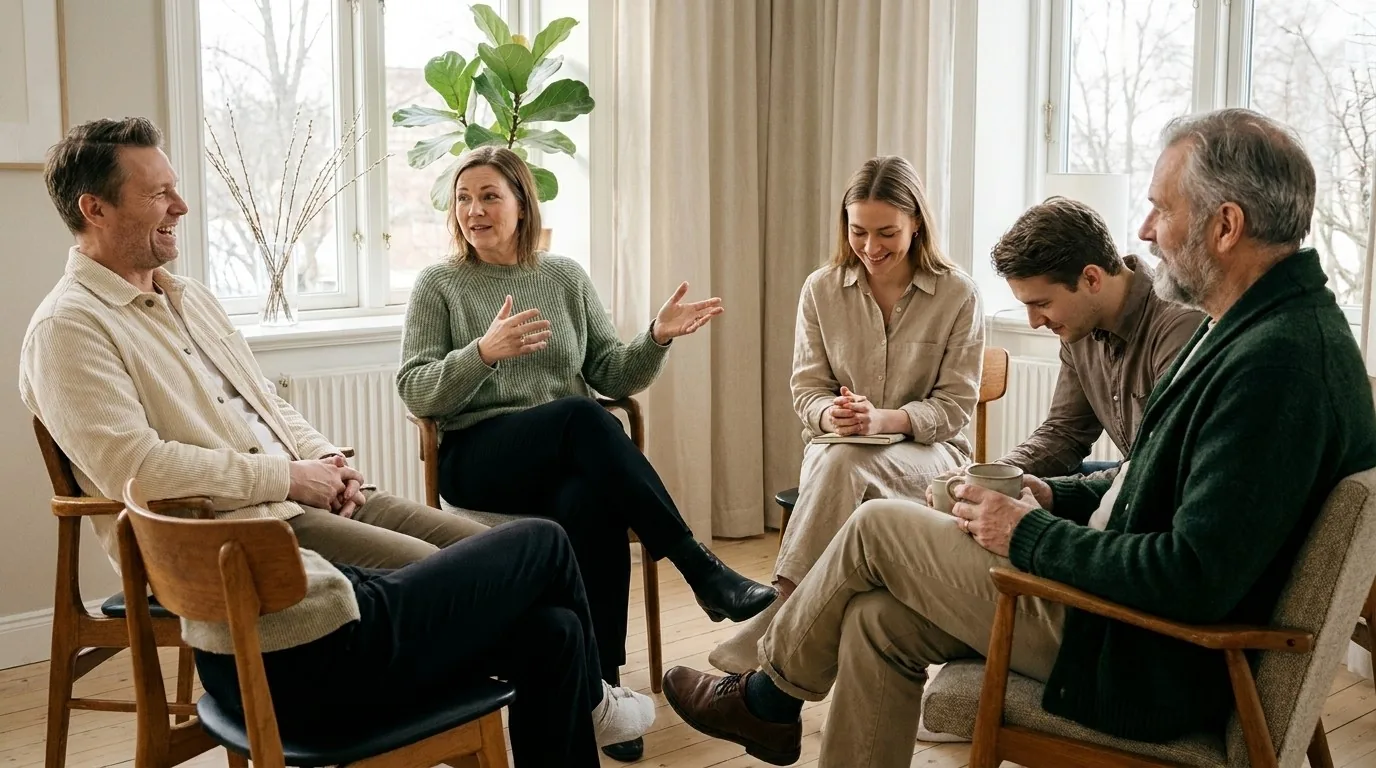
When a team is safe, questions get asked, even ones that might sound simple. Mistakes are reported early and lead to improvements. More than a couple of people speak in meetings, and new colleagues find their voice quickly. Someone can say "I will not have time for that" and the team reprioritises.
When safety is missing, meetings go quiet and the real conversations happen afterwards at the coffee machine. Mistakes are hidden or blamed on others. The manager's proposals are met with "sounds good", and people say yes to everything and then work late in silence.
Silence is rarely a personal problem. It often reflects how work is led and organised: whether criticism has had negative consequences before, whether workload is so high that nobody has the energy to raise anything, or whether roles are unclear. Start by looking at the conditions, not the people.
Five ways managers build safety
Safety is built by what a manager does again and again. Five behaviours make a particular difference:
- Frame the work as something the team learns from. Say openly that the work is uncertain and that everyone's perspective is needed.
- Show that you can be wrong. Admit your own mistakes and uncertainties. It gives others permission to do the same.
- Invite participation. Ask open questions, wait for the answer and ask the quietest people in particular.
- Respond to what is said with appreciation. Thank people for raising a problem, even when it is uncomfortable, and ask what you can do about it.
- Act, and say what happened. Safety grows when something happens afterwards, and when the team hears what happened even if the answer was no.
Psychological safety and the work environment
Psychological safety is not a legal requirement and is not mentioned as a term in the Swedish regulations on the organisational and social work environment (AFS 2023:2). But the two are connected. The regulations cover workload, working hours, victimisation and managers' knowledge, among other things. Early signals about exactly those areas only surface where it is safe to voice them. High workload and a lack of resources that nobody dares to raise is a typical example. Read more in demands and resources.
How it connects to Aumla's model
In Aumla's model of physical, mental and social wellbeing at the individual, team and organisational level, psychological safety belongs in social wellbeing at the team level. It also affects mental wellbeing, because worries nobody dares to voice grow, and the organisational level, because leaders and managers set the frame for pace, goals and how mistakes are handled. That is why safety cannot be left to individual employees or built at one level alone.
This is how Aumla works with safe teams: an anonymous survey that shows where the team and the organisation stand, a review with the leadership group that chooses a few themes, a workshop for managers on what builds safety and how to lead the conversations, short team exercises for employees, and a new survey after a few months to see whether it made a difference.
Read more about Aumla's work on sustainable teams or about how sustainable teams are created in everyday work. A simple 30-minute exercise to try in your own team is included in the free guide to psychological safety.
Sources
- Edmondson, A. (1999). Psychological Safety and Learning Behavior in Work Teams. Administrative Science Quarterly, 44(2), 350–383.
- Frazier, M. L. et al. (2017). Psychological Safety: A Meta-Analytic Review and Extension. Personnel Psychology.
- Google re:Work, Guide: Understand team effectiveness (Project Aristotle).
- Karolinska Institutet, Går trygga medarbetare säkrare? (research project funded by AFA Försäkring).
- Arbetsmiljöverket, AFS 2023:2 Organisatorisk och social arbetsmiljö.