Keynotes & workshops · Danderyd Municipality
Danderyd Municipality – leading the way on menopause and women's health at work
A digital talk for the Social Services department during Health Week, with local viewing groups and a recording in Learnifier
Danderyd Municipality, north of Stockholm, is one of the Swedish municipalities leading the way on women's health at work. During Health Week in October, the Social Services department invited its employees to a digital talk on women's health and menopause. Employees gathered at their workplaces to watch together, and the recording is available to everyone in the learning platform Learnifier. The talk covered hormones, the menstrual cycle and menopause, along with very practical tools for everyday life: more micro-breaks, walks, and seeing the menstrual cycle as four seasons.
The challenge
The Social Services department in Danderyd Municipality has around 675 employees, including in elderly care and disability support. Many work in health and social care, across different workplaces and schedules, so gathering everyone in one place at the same time rarely works. At the same time, women's health and menopause affect a large share of employees, yet are still rarely discussed at work.
During Health Week, the municipality's health ambassadors wanted to give employees knowledge about how hormones affect energy, mood and wellbeing, and to show that women's health is part of occupational health and safety. The initiative needed to reach many people, be easy to join and stay available afterwards. It also had to be relevant to everyone, including male colleagues, managers and family members.
What Aumla did
On 22 October 2026, Miriam Sundholm and Cinna Brahme from Aumla gave the digital talk Women's health at work: supporting each other to feel well. Employees gathered at their workplaces and watched together, which made it easy to keep the conversation going afterwards.
The talk had four parts:
- Why women's health is a workplace issue, and how the new standard ISO 45010 makes it part of systematic occupational health and safety management
- The biology behind it: the circadian rhythm, the menstrual cycle and the stages of menopause
- What each person can do: stress and the nervous system, movement, nutrition, sleep and breathing
- What the workplace can do: how managers and colleagues can create safety and support
Women's health concerns everyone. When you understand what a partner, a colleague or a mother is going through, you can support them better.
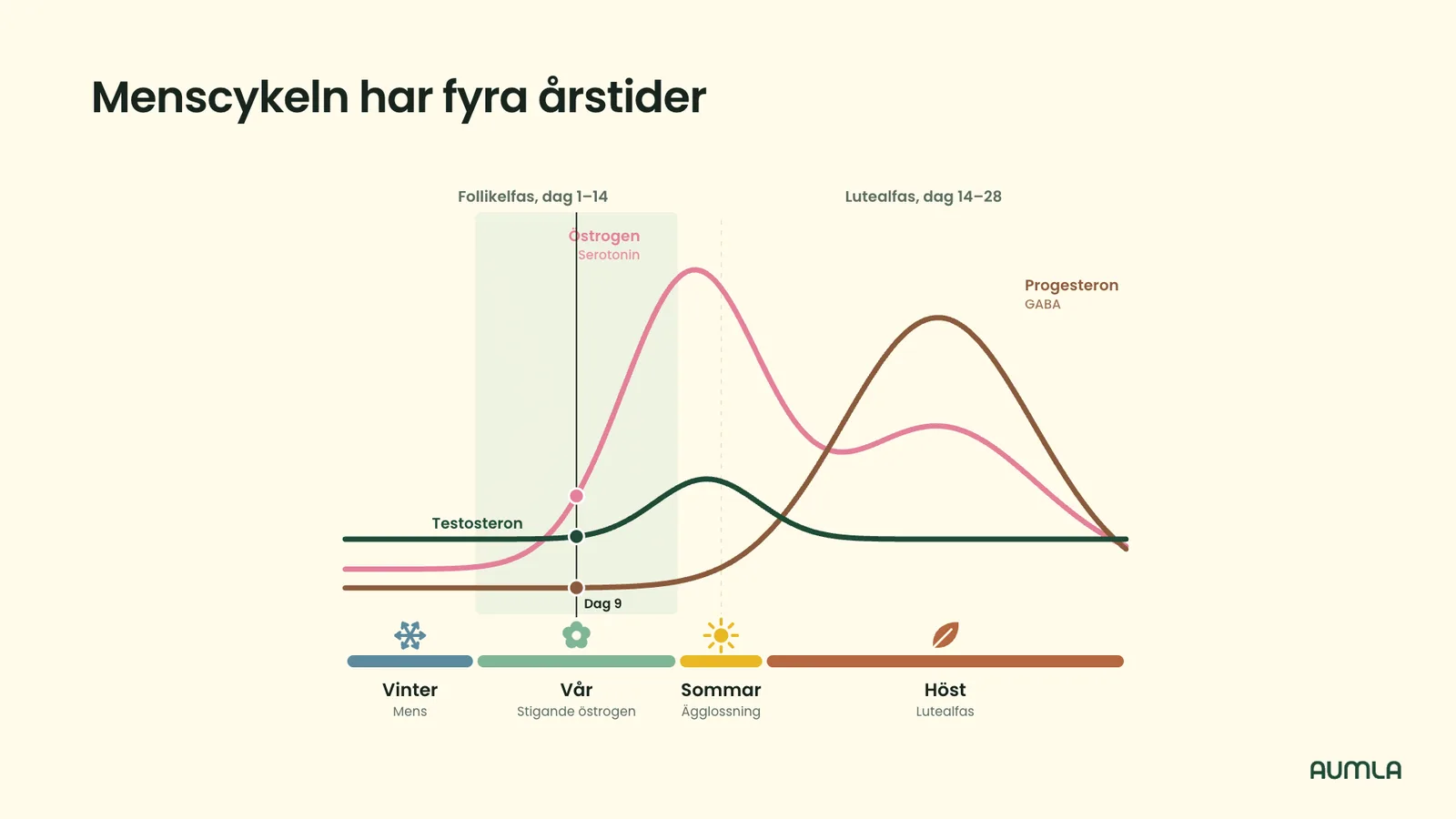
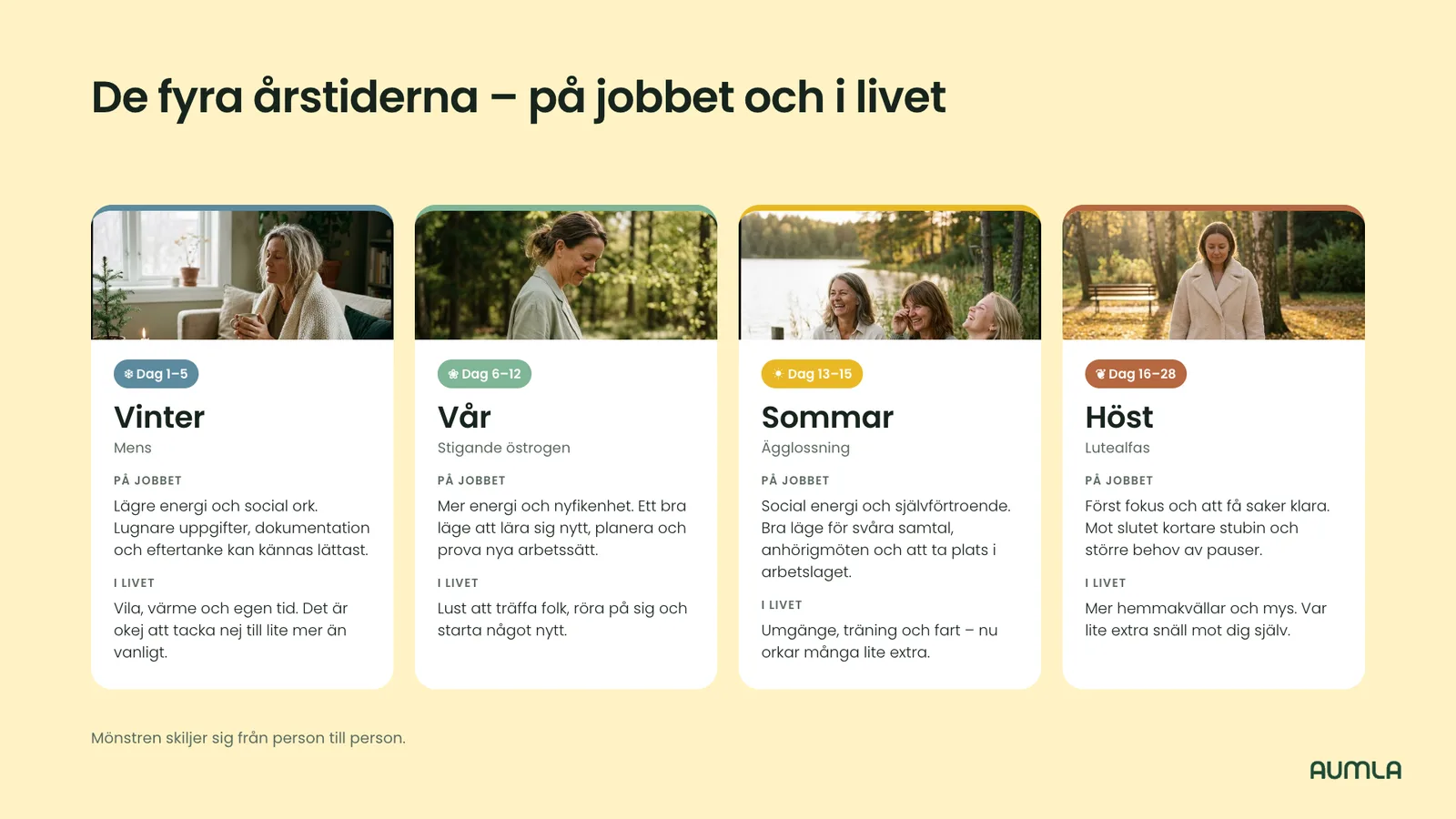
The image of the menstrual cycle as four seasons was what stuck most. Winter is a time for rest and reflection, spring for curiosity and new ideas, summer for social energy, and autumn for wrapping things up and creating calm. The seasons make it easier to plan the working week, be kinder to yourself and understand your colleagues.
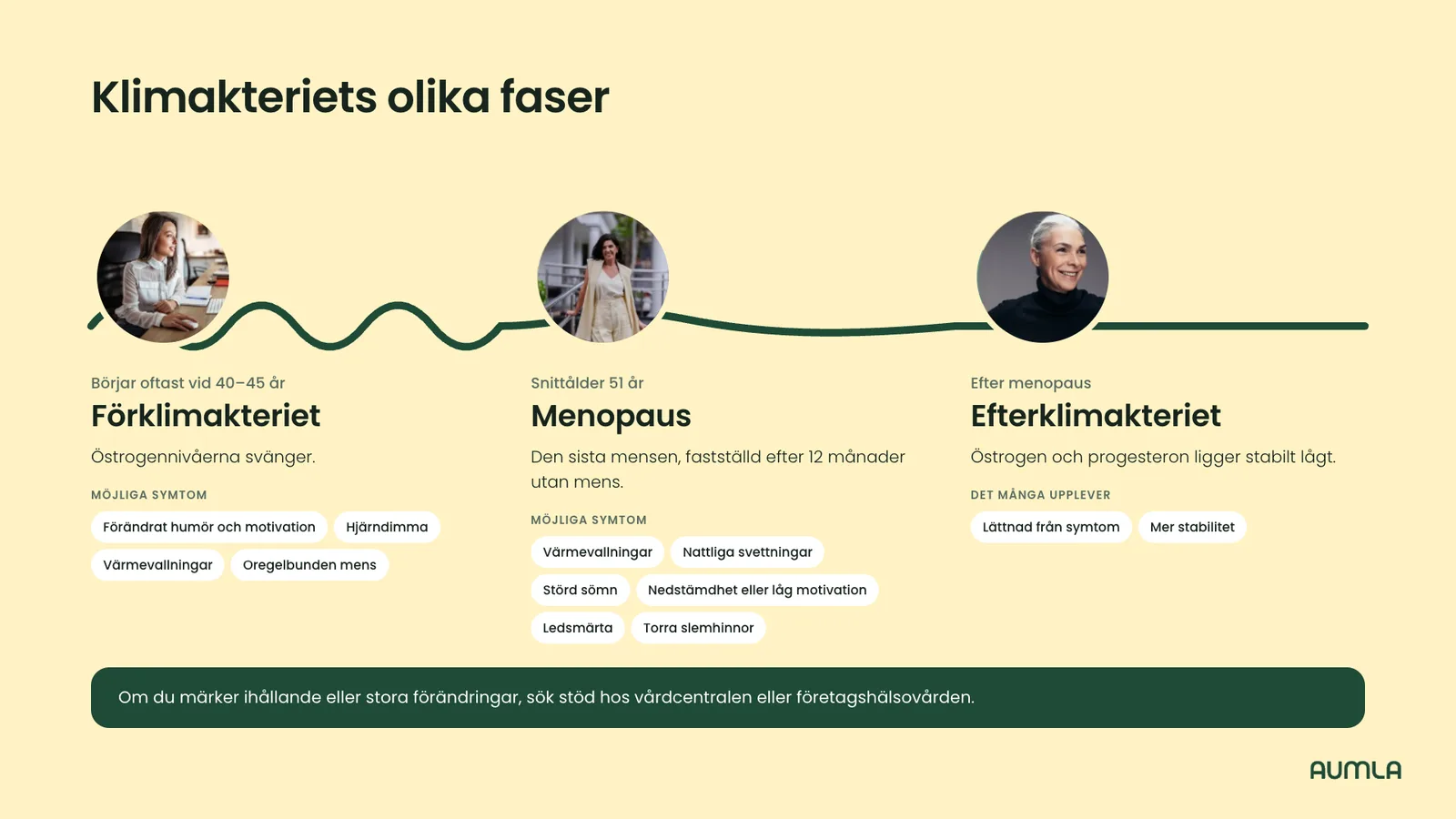
The talk also covered the stages of menopause. Many people don't know that perimenopause often starts as early as age 40 to 45, and that the first signs may be sleep problems, brain fog or mood changes rather than hot flushes.
What employees took away
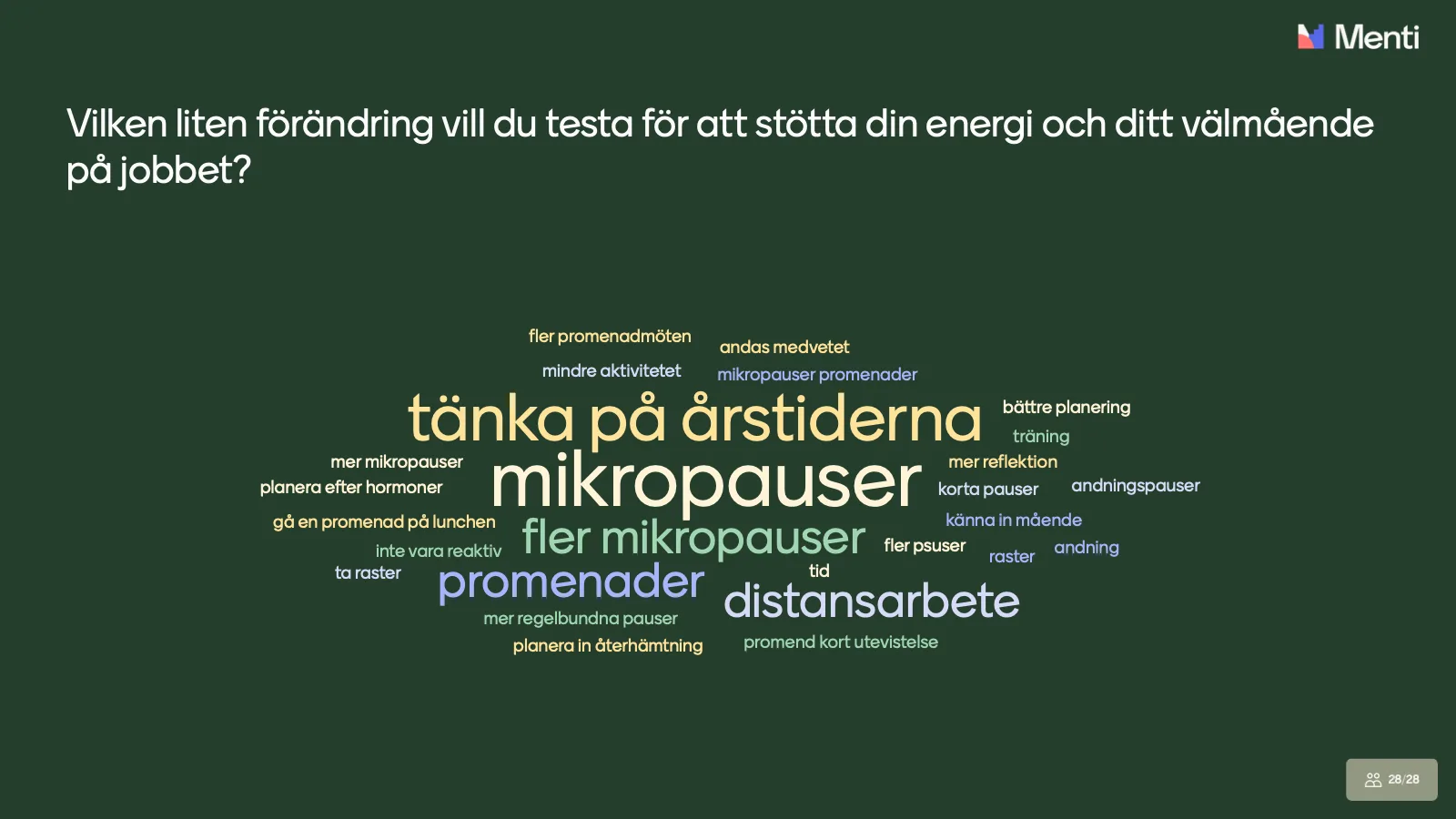
During the talk, participants answered questions anonymously in Mentimeter. Their answers bring the content to life and show what actually landed.
- Most already knew something. Two out of three said they know a fair amount about how hormones affect energy, mood and wellbeing, but few felt they know a lot.
- Micro-breaks and walks were the small changes most people wanted to try straight away. Other answers included breathing breaks, walking meetings, planning in recovery and planning around hormones.
- Seeing the menstrual cycle as seasons was what participants took away most, together with the breathing exercise, more knowledge about the body and about the stages of menopause.
- Openness and talking about it more was what the workplace needs, along with flexibility, the option to work from home and more training like this.
The result
Employees at several workplaces received the same knowledge at the same time, without travel and with the chance to talk further locally. Anyone who couldn't join live can watch the talk afterwards, and anyone who wants to can watch it again.
The recording is placed in Learnifier and stays available to employees for six months. There, the talk becomes part of the regular training offer rather than a one-off event. It is also easy to use when onboarding new employees and managers, or to start a conversation in the team.
An example for other municipalities and employers
Municipalities have a large share of women among their employees, especially in health care, social care and schools. That is also where sickness absence is often highest. With ISO 45010, the world's first international standard on menstruation and menopause at work, there is now a clear framework for handling these issues within occupational health and safety management.
Danderyd Municipality shows how an employer can lead the way without large resources:
- Use an existing initiative, such as a health week or a team meeting theme, so the topic fits into what is already there
- Choose a digital format that reaches employees across all workplaces and schedules, with local viewing groups where possible
- Record it and add it to the learning platform, so the knowledge stays available to night staff, people on leave and new starters
- Listen to employees during the talk, and use their answers as input for the next step
Key lesson
Small changes make a big difference when they build on knowledge. A micro-break, a lunchtime walk or seeing your menstrual cycle as seasons can change how a working day feels. With a digital talk and a recording in Learnifier, the knowledge reaches the whole organisation and stays there. That is how a municipality can lead the way on women's health at work.